Guerin® Blog
Driving Advice
How to Use Air Conditioning in Summer for a Perfect Road Trip
Share


Getting into a rental car parked under the blazing sun during a Portuguese summer is an experience you won’t soon forget. The steering wheel burns your hands, the seats are scorching, and that suffocating wave of trapped heat makes the cabin feel like an oven. In that exact moment, how you handle your car's air conditioning in summer during the first few minutes will determine not only your comfort but your entire driving experience.
While it is one of the most heavily used systems in a vehicle, it is also one of the least understood. If you are a tourist visiting Portugal for the first time and facing a much more intense heat than you anticipated, or an expat settling into your sunny routine, this guide is for you. Keep reading to discover how to use your air conditioning efficiently, save fuel, stay safe, and remain comfortable on your summer trip.
How does a car’s air conditioner work?
Contrary to popular belief, the air conditioner does not create cold air. In fact, what it does is remove heat and moisture from inside the car.
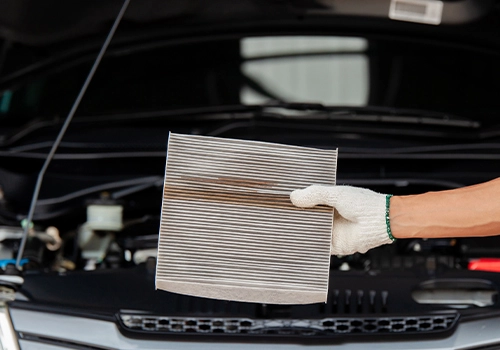
A very important component in this process is the cabin filter, or air conditioner filter. It acts as a barrier that traps dust, pollen, and bacteria, ensuring the quality of the air circulating inside the car. Although small and often overlooked, it has a direct impact on passenger health, climate control efficiency, and road safety. For these reasons, it should be replaced regularly, typically once a year or every 15,000 km.
Automatic vs. Manual Climate Control
Manual: The driver controls everything, from temperature to fan speed. It requires constant adjustments throughout the trip.
Automatic: The driver sets the temperature, and the system automatically manages the fan speed and airflow distribution to maintain a stable environment.
The Impact on Fuel Consumption
Air conditioning has a direct impact on fuel economy. This increase depends on several factors:
- Outside temperature: The hotter it is outside, the harder the system has to work.
- Power: Setting the fan to maximum while the temperature is at minimum requires more energy.
- Engine type: Smaller, less powerful engines will experience greater fuel consumption.
- Driving with windows open: Driving with the windows open creates air resistance, causing the engine to work harder and consequently consume more fuel.
What is the ideal temperature setting for the air conditioning in the summer?
The best temperature for driving in the summer is between 22º and 24º. This range is ideal because, in addition to keeping the cabin cool, it prevents thermal shock and reduces fuel consumption.
If the car is very hot, you can start with a lower temperature,for example, 20° and when the interior cools down, increase it to 22 or 23. As you approach your destination, raise the temperature further so you don’t feel such a drastic temperature difference when you get out of the car.

How do you use the air conditioning properly in summer?
To cool down your car more quickly and efficiently, follow these steps:
- Open the doors and windows for one minute before starting the engine to let the accumulated hot air escape.
- Start your drive with the windows slightly open for the first 2 or 3 minutes and turn on the fan to let the remaining heat escape.
- Turn on the AC and close the windows.
- Activate the recirculation mode; this causes the system to cool the air already inside the car rather than drawing in hot air from outside.
- After a while, you can turn off the recirculation mode to refresh the air
When should you have your air conditioning serviced?
The key to avoiding unpleasant surprises in the middle of a vacation trip is preventive maintenance. You should have the system checked at least once a year, ideally before the start of summer. In addition to keeping up with routine maintenance, having extra protection like Premium Road Assistance provides the peace of mind needed to handle these extreme temperatures. An air conditioning breakdown on a summer trip to the Algarve or the Alentejo countryside can be a real emergency, especially with children or elderly passengers on board.

Be on the lookout for these warning signs, which indicate the need for maintenance:
- Unpleasant odors when turning on the air conditioning (a sign of mold or a clogged filter)
- The system takes a long time to cool down
- Unusual noises when turned on
- Excessive dust buildup
- Moisture or constantly fogged-up windows
Maintenance includes cleaning, replacing the filter, and recharging the refrigerant if leaks are detected.
Travel in comfort and safety with Guerin
The peace of mind that comes with renting a car in the summer and knowing that the climate control system will be working properly. All Guerin vehicles undergo regular inspections so that your only concern is enjoying the scenery.
For summer trips with children or to destinations with intense heat, such as the Alentejo, Algarve, or the Douro Valley, we recommend vehicles equipped with dual-zone or multi-zone climate control systems, which allow you to adjust the temperature in the front and back separately to ensure greater comfort for all passengers.
When making your reservation, remember that you can enhance your experience with Guerin’s complementary products. Add Premium Road Assistance to protect your vacation against any unforeseen events, and choose the Adicional Driver option to share the driving, reduce heat-related fatigue, and ensure you arrive at your destination safely.

Share