Guerin® Blog
Driving Advice
Car battery life: how long does it last and how to extend it?
Share


A car battery is one of those components we only think about when it fails. And most of the time, that happens at the worst possible moment: before heading to work, during a trip, or far from home.
But did you know your car battery gives warning signs before it stops working? Understanding car battery life and what affects its lifespan can save you from delays and unnecessary stress.
How long does a car battery last?
Car battery life is not unlimited. On average, a conventional battery lasts between 3 and 6 years. However, this is not an exact number. The truth is that your battery’s health depends on several factors: usage conditions and frequency, the climate where you live, and, of course, how well the vehicle is maintained.
For example, very high or very low temperatures can accelerate wear. Likewise, a car that sits unused for long periods may discharge the battery more quickly.
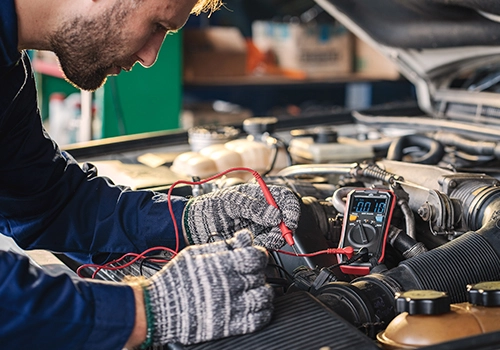
What are the signs that your battery may be failing?
Before completely failing or leaving you stranded, a battery usually gives some warning signs. Being aware of these can help you avoid unexpected breakdowns:
1. Difficulty starting the engine.
Does your car take longer to start in the morning, or does the ignition sound weak and strained? This is the most common sign of loss of charge.
2. Dim lights and unstable electrical system.
Do your headlights appear dimmer, or do dashboard lights fluctuate when you turn on the radio or air conditioning? The battery may no longer be distributing power consistently.
3. Dashboard warnings and slow performance.
Is the battery warning light turning on or flashing unexpectedly? Or do you notice your electric windows moving slower than usual? These small symptoms indicate that the battery is nearing the end of its lifespan. It’s time to have it tested before it’s too late.
What accelerates battery wear?
Some everyday habits and situations are real "enemies” of the battery and can reduce car battery life without you realizing it. The most common are:
- Leaving lights or equipment on with the engine off: Keeping the radio, interior lights or headlights on without the alternator running quickly drains the battery.
- Frequent short trips: The alternator needs time to recharge the battery after starting. If you only drive for 5 minutes, the battery never fully recharges.
- Long periods without using the vehicle: If the car is not driven, the battery naturally loses charge (self-discharge).
- Constant exposure to extreme temperatures: Cold slows chemical reactions, while excessive heat accelerates internal corrosion.
- Lack of regular maintenance: Ignoring battery terminals or not checking the charging system (alternator) can be critical. Dirt buildup or loose connections force the battery to work harder, significantly reducing its lifespan.
What practical tips can help extend a car battery’s lifespan?
Want to make your battery last as long as possible? Follow these practical tips:
- Keep terminals clean: Dirt and corrosion block proper energy flow.
- Avoid turning on electronics before starting the engine: Lights, air conditioning, and radio should only be turned on after ignition.
- Take a longer drive occasionally: A 20–30 minute highway drive is the ideal "boost” to fully recharge the battery.
- Carry out regular maintenance and check the battery before long trips: At Guerin stations, we ensure all vehicles undergo rigorous checks so you can avoid surprises.

Electric and hybrid car batteries: what are the differences?
It’s important not to confuse the concepts. In traditional cars, the battery is only used to start electrical systems. In electric and hybrid vehicles, the battery plays a much more central role.
Electric and hybrid car batteries: what are the differences?
It’s important not to confuse the concepts. In traditional cars, the battery is only used to start electrical systems. In electric and hybrid vehicles, the battery plays a much more central role.
The main difference lies in how energy is used and managed:
Hybrid cars (HEV/PHEV).
Hybrid and plug-in hybrid vehicles have two types of batteries: a small conventional one (12V) for electronic systems and a larger one for propulsion. The propulsion battery is designed to last almost the entire lifespan of the vehicle, but frequent use of electric mode requires smart charge management.
Electric cars (BEV).
In electric vehicles, the battery is the core element of the car and provides all propulsion. These batteries, typically lithium-ion, are more robust and have a longer lifespan, usually between 8 and 15 years, depending on usage and technology.
Unlike traditional batteries, they do not suddenly "die.” Instead, they gradually lose a small percentage of their total range over time.
Regardless of the vehicle type, all batteries require specific care and proper maintenance to ensure optimal performance. Discover the Guerin fleet and choose the solution that best suits your journeys.
Flat battery: what to do?
Even with all precautions, a battery may fail. When that happens, it’s important to know how to act and stay calm:
- Try starting the car with jump leads (if you know how to do it safely).
- Avoid repeatedly turning the ignition, as it may damage the starter motor.
- Seek professional assistance.
Prevention is always the best solution.
A battery failure may not only be inconvenient, it can also pose a risk, especially on long journeys or in remote areas.
Car battery life depends on several factors, but one thing is certain: prevention is always better than fixing the problem. Solutions such as Pack Platinum are designed so that, even in the event of an electrical failure, you have full protection and priority assistance.
Prevention is key, but having a trusted partner for unexpected situations is essential. Planning a trip? Book your car now through a 100% digital process and rely on Guerin to ensure you reach your destination safely and with confidence.

Share