Guerin® Blog
Driving Advice
8 tips for economical driving
Share


Major crises often arise when least expected. They frequently catch us off guard and, when they occur in oil-producing regions, fuel prices are likely to rise.
As a result, travel costs may increase. However, at Guerin, we don’t just bring bad news, we also share solutions: here are 8 tips for economical driving with your car. Shall we begin?
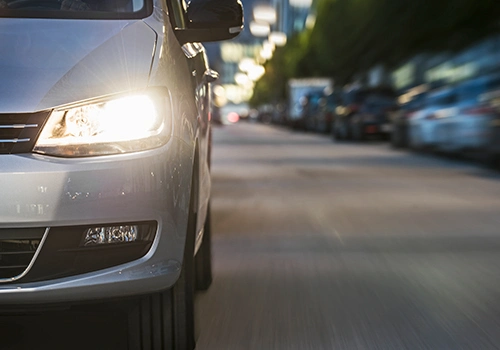
1 - Aggressive driving is the enemy of economical driving
It’s a fact: aggressive driving can increase fuel consumption by up to 40%. In urban environments, around 50% of energy is used solely for acceleration.
Harsh braking and rapid acceleration consume more fuel, as well as wearing out tyres, the clutch and shock absorbers. What should you do? Simple: maintain a steady speed whenever possible and use cruise control on motorways.
Economical driving also involves keeping engine revs low by using higher gears, which improves fuel efficiency.
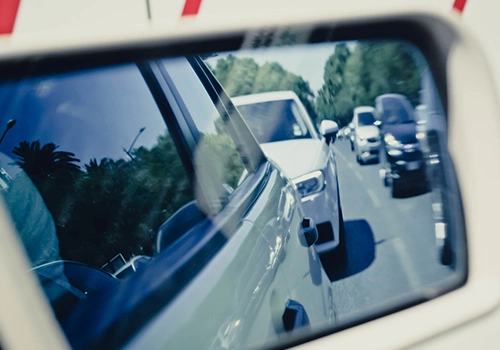
2 - Safe distances
It may seem obvious, but it’s essential: maintain safe distances from other vehicles. This allows you to anticipate the need for controlled, gradual braking. If possible, avoid steep inclines, as the engine requires more power and therefore uses more energy.
3 - Aerodynamic resistance and air conditioning
This may not be obvious, but it is worth mentioning: whenever possible and appropriate, keep your car windows closed. This helps avoid additional aerodynamic drag caused by turbulence.
On the other hand, air conditioning can consume up to 10% of the engine’s energy, so its use should be minimised whenever possible.
4 - Park in the shade whenever possible
Economical driving also involves parking in the shade. When a vehicle is left in direct sunlight, it overheats, which can increase fuel evaporation. Additionally, you will need to use air conditioning more, which, as mentioned above, increases energy consumption.
5 - Avoid long periods of idling
For economical driving avoid leaving the engine idling for long periods. If you need to stop the car, bring it to a halt and switch off the engine.
If the engine is still cold, keep revs low until it warms up. On flat terrain, it is not advisable to warm up the engine at idle for more than 30 seconds. However, if your journey begins with an uphill section, allow the engine more time to warm up.
6 - Adjust tyre pressure
Did you know that driving with tyre pressure just 1 PSI below the recommended level can increase fuel consumption by up to 3%? Also, avoid using tyres that exceed the manufacturer’s recommended size.
Oversized tyres and low tyre pressure increase resistance, making economical driving more difficult.
7 - Maintain your engine
Ensuring proper engine maintenance is essential for effective economical driving. Replace spark plugs, filters, oil and other components whenever necessary.
Additional note: do not use engine oil with a viscosity rating higher than that recommended by your vehicle manufacturer.
8 - Car sharing
Economical driving also includes sharing your vehicle when your journeys align with those of colleagues, friends or family members.
Moreover, transporting just one person in a car can mean three times the energy cost per kilometre per person compared to a fully occupied Airbus A380.
Additional tip: practise economical driving with Guerin
With Guerin, economical driving becomes simpler: a diverse fleet gives you the opportunity to hire the car that best suits your driving style, making the process simple and flexible, at your own pace, without depending on schedules - and, of course, 100% digitally.

Share