Guerin® Blog
Driving Advice
Tyre pressure: what to check before a long journey in Portugal
Share


Tyre pressure should be checked before any long journey, especially during the summer. If you are driving in Portugal, this step is even more important before motorway trips, coastal routes or family holidays with a fully loaded car.
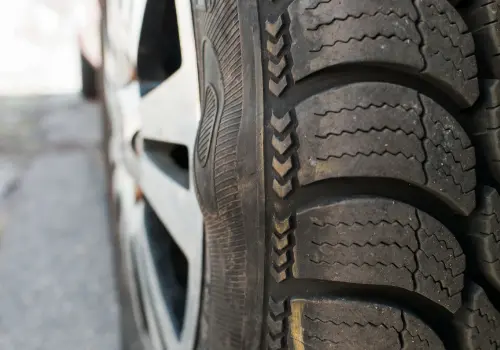
Tyres with pressure below the recommended level can increase fuel consumption by up to 3%, reduce vehicle stability, shorten tyre life and increase the risk of aquaplaning. On very hot days, low pressure can also contribute to sidewall bulges, which increase the risk of a tyre blowout on the motorway.
Before setting off, it is worth taking five minutes at a petrol station to check your tyre pressure. It may seem like a small task, but it can make a real difference to comfort, safety and fuel consumption.
What is tyre pressure?
Tyre pressure is the amount of air inside each tyre. It is usually measured in bar or PSI and should match the value recommended by the vehicle manufacturer.
This value can vary depending on the car model, tyre type and the load being carried. When the pressure is correct, the car stays in proper contact with the road, uses less fuel and wears the tyres more evenly.
Where can I find the correct tyre pressure?
The correct tyre pressure is usually shown in one of three places:
- Inside the driver’s door
- In the owner’s manual
- On the fuel filler flap
In some cases, there are two values: one for normal load and another for maximum load. If you are travelling with family, suitcases, beach equipment or bicycles, check the value recommended for a loaded vehicle.
If the car has a spare wheel, check that too. It is often forgotten and many drivers only discover it is flat when they actually need it.
When should I check the tyre pressure?
You should check your tyre pressure at least once a month and before every long journey. In summer, this is even more important because hot roads increase tyre temperature.
Tyre pressure should be measured when the tyres are cold, ideally before you start a long trip. After around 3 km of driving, pressure can rise by 4 to 8 PSI, or around 0.3 to 0.6 bar, because the air inside the tyre heats up. For this reason, never reduce the pressure of a hot tyre, as the reading may be higher than the true recommended value.
How can I check the tyre pressure in five minutes?
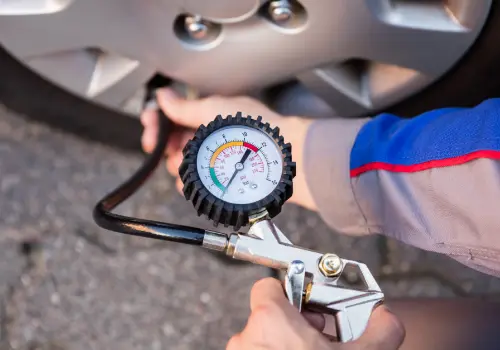
All you need is a pressure gauge, which is available at most petrol stations.
Follow these steps:
- Check the recommended pressure for your car
- Remove the tyre valve cap
- Fit the pressure gauge onto the valve
- Read the value displayed
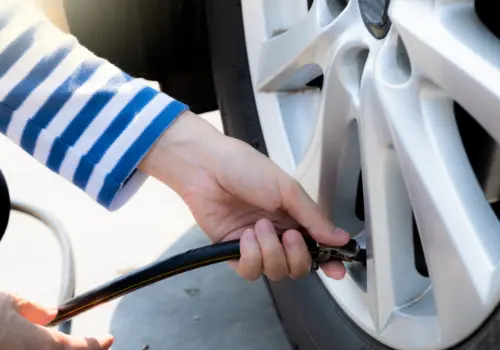
- Add or release air if needed
- Put the valve cap back on
Repeat the process on all four tyres. If possible, do this before loading the car. It is more practical and helps avoid rushing on the day of your trip.
Low tyre pressure: what are the risks?
Low tyre pressure increases rolling resistance. In practice, the engine has to work harder to move the car, which can increase fuel consumption.
There is also an impact on safety. Underinflated tyres deform more easily, heat up faster and can lose grip when cornering, braking or driving on wet roads.
On the motorway, in very hot weather and with a loaded car, the risk is even greater. Incorrect pressure can cause wear on the tyre shoulders, vibrations or sidewall bulges. If you notice any of these signs, try to stop as soon as it is safe and ask for assistance.
Can tyre pressure be too high?
When the tyre pressure is too high, the central part of the tyre is pressed more firmly against the road. This can reduce grip, increase braking distance and cause uneven wear in the centre of the tread.
It also makes driving less comfortable, as the tyre absorbs bumps and road imperfections less effectively. On long journeys, this difference becomes even more noticeable.
What about a rental car?
At Guerin, the fleet is checked regularly. Even so, before starting a long journey in Portugal, you can ask for a visual check when collecting your vehicle, especially if you are planning to drive long distances or carry luggage.
If you notice loss of pressure, vibration, tyre bulges or any dashboard warning during your trip, report it immediately. Guerin services such as Premium Road Assistance and Windscreen and Wheel Protection help you travel with greater peace of mind, especially on holidays, motorway journeys and longer routes.
Before setting off, check this list
Make sure you check:
- The pressure of all four tyres
- The value for normal or maximum load
- The general condition of the tyres
- Any bulges or objects stuck in the tyres
- Any dashboard warnings
Prepare your journey with Guerin
Checking the tyre pressure before travelling only takes a few minutes and can help prevent bigger problems on the road. Before enjoying your holiday or short break in Portugal, check the tyres while they are cold and follow the values recommended by the manufacturer.
Hiring a car with Guerin? Choose the model that best suits your journey and check the available protection options, so you can travel with even greater confidence.

Share